
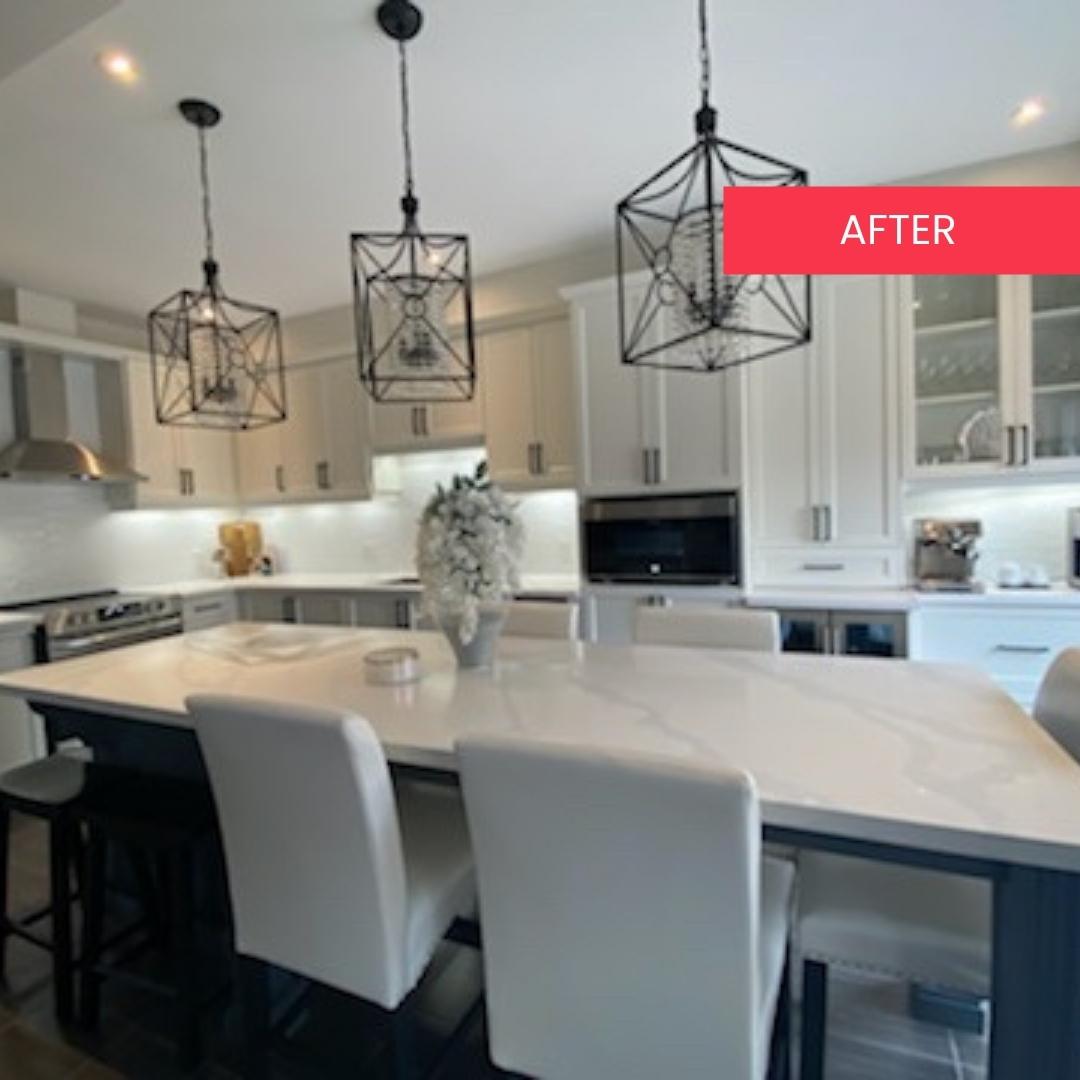
Two-tone cabinets work best when each colour has a clear role. A common approach uses a lighter perimeter with a darker island, giving the room a bright background and a grounded focal point.
Start with fixed materials
Cabinet colour should respond to surfaces that are staying: countertops, backsplash, flooring, appliances and nearby wall colours. Collect physical samples and view them beside those materials in morning, afternoon and evening light.
Use visual weight carefully
Darker lower cabinets can anchor a room and conceal everyday marks. Light upper cabinets reduce visual weight around eye level. A dark island can define the centre of an open plan, but it should still connect to hardware, lighting or another repeated finish.
Keep the undertones related
Warm white beside a cool grey can make both colours look unintended. Compare undertones rather than colour names. Greige, off-white and muted green may look different under warm LEDs than they do under daylight.
Limit competing finishes
- Repeat one cabinet colour on a pantry, hood detail or built-in.
- Use hardware to connect both colours without matching every metal in the room.
- Let dramatic stone or backsplash patterns lead; keep cabinet colours quieter.
- Approve the final choice with a physical sample.
Refinishing makes a two-tone plan possible without replacing suitable cabinets. For a profile change as well as colour, refacing can add new doors and drawer fronts while retaining the existing boxes.